
1 Nephi Chapter 2
Lehi takes his family into the wilderness by the Red Sea– They leave their property– Lehi offers a sacrifice to the Lord and teaches his sons to keep the commandments– Laman and Lemuel murmur against their father– Nephi is obedient and prays in faith; the Lord speaks to him, and he is chosen to rule over his brethren. About 600 B.C.
5: “And he came down by the borders near the shore of the Red Sea; and he traveled in the wilderness in the borders which are nearer the Red Sea; and he did travel in the wilderness with his family, which consisted of my mother, Sariah, and my elder brothers, who were Laman, Lemuel, and Sam.”
This is one of many verses that are oddly repetitive. You will not find verses such as these in the Bible.
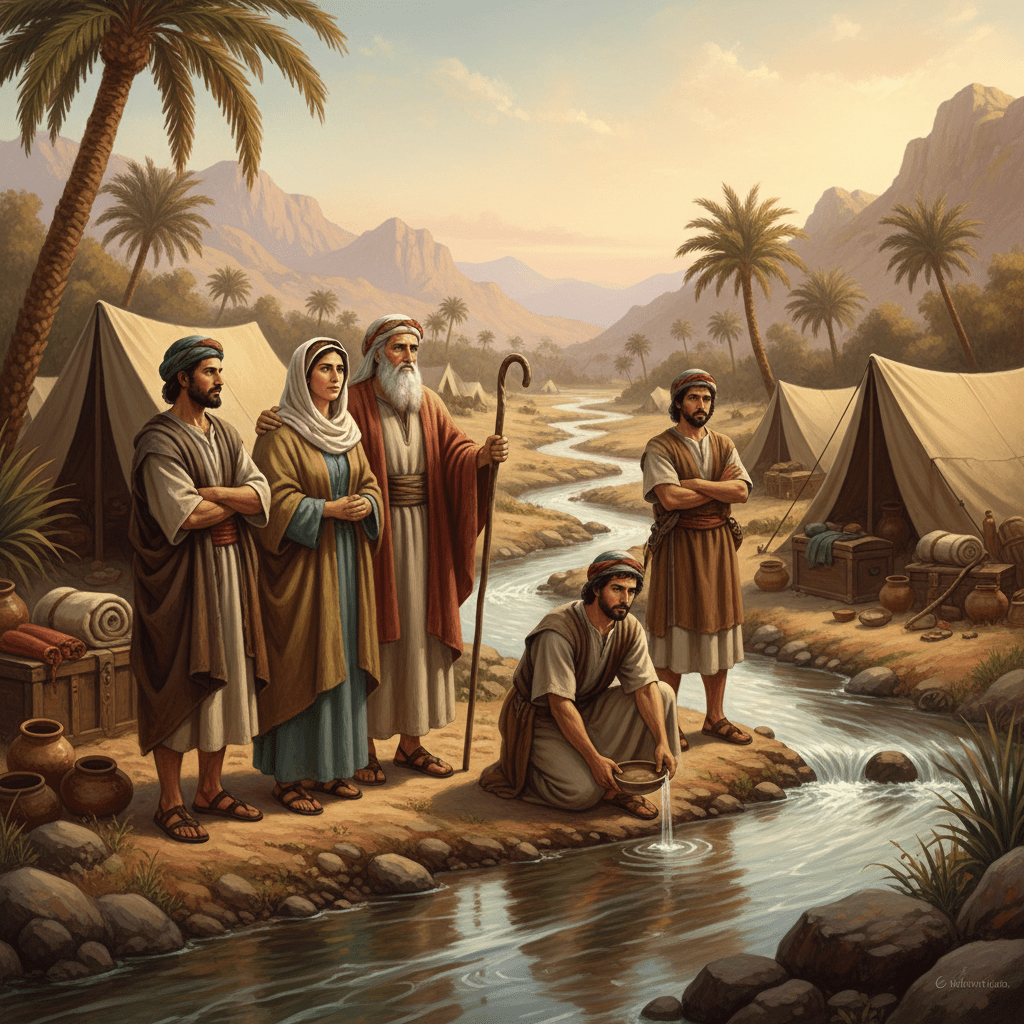
6: “And it came to pass that when he had traveled three days in the wilderness, he pitched his tent in a valley by the side of a river of water.
7: And it came to pass that he built an altar of stones, and made an offering unto the Lord, and gave thanks unto the Lord our God.
8: And it came to pass that he called the name of the river, Laman, and it emptied into the Red Sea; and the valley was in the borders near the mouth thereof.
9: And when my father saw that the waters of the river emptied into the fountain of the Red Sea, he spake unto Laman, saying: O that thou mightest be like unto this river, continually running into the fountain of all righteousness!”
In the interest of fairness, I think I should mention my search for answers as to where this river and valley might be. I did a basic Google search, and I only found LDS sources. All of them talked about a chance discovery in 1995 by a pair of LDS researchers who got lost in Saudi Arabia trying to find a site known to locals as the Waters of Moses. Per their report, they wandered along the shoreline of the Gulf of Aqaba when they stumbled upon a “magnificent narrow canyon” which “ended in a palm-lined cove.” This place was Wadi Tayyib al-Ism, which is 74 miles south of Aqaba. They calculated this to be roughly a 3 days’ journey from Jerusalem, which would line up with the narrative in this chapter. The LDS considers this significant because “continually running” rivers have not been known to exist in Saudi Arabia. It was noted that the river flowing out of this canyon was more like a small stream. However, geography does change over time, so LDS researchers point out this stream could have been a river at one point and float the possibility that Saudi Arabia could have been wetter in ancient times. For more information, see https://scripturecentral.org/knowhy/have-the-valley-of-lemuel-and-the-river-of-laman-been-found.
11: “…they did murmur against their father, because he was a visionary man, to leave the land of their inheritance…to perish in the wilderness.”
This is oddly reminiscent of the Israelites angrily accusing Moses of leading them to the wilderness to die. (See Exodus 14:11).
22: “And inasmuch as they brethren shall rebel against thee, they shall be cut off from the presence of the Lord.”
This is also strangely reminiscent of another occurrence in the Old Testament: when Joseph was chosen to rule over his brothers. (See Genesis 37: 5-11). I’m beginning to notice a pattern here.
 The Inquisitive Christian
Leave a comment