
Various insights come to me at the most random times. This evening, I was relishing the aroma of the apple pie syrup I was making while the rain fell softly on my kitchen windowpanes. Between the occasional stirs of the simmering amber concoction, I perused chapter 10 of 1 Nephi. Besides the seeming plagiarism of New Testament passages, something else jumped out at me: the use of the phrase “Holy Ghost.” Some translations use the phrase “Holy Spirit,” but the observation remains the same. While the Holy Spirit is absolutely present and active in the Old Testament, that particular phrase is only used three times: once in Psalm 51:11, and twice in Isaiah 63:10-11. In all other parts of the Old Testament, he is called “the Spirit of the Lord,” “the Spirit of God,” or simply “Spirit.” Thus far in the Book of Mormon, that phrase has appeared numerous times, which is a very peculiar difference from the Bible. Given the evidence I’ve presented in my post “This Vision Seems Awfully Familiar” of Smith’s plagiarism, I think it is perfectly reasonable to conclude that phrase and other passages that match the Bible are because he was attempting to make his book appear as if the prophecies it contains are accurate. However, I’m not here to tell you what to think. Review the evidence, then decide for yourself.
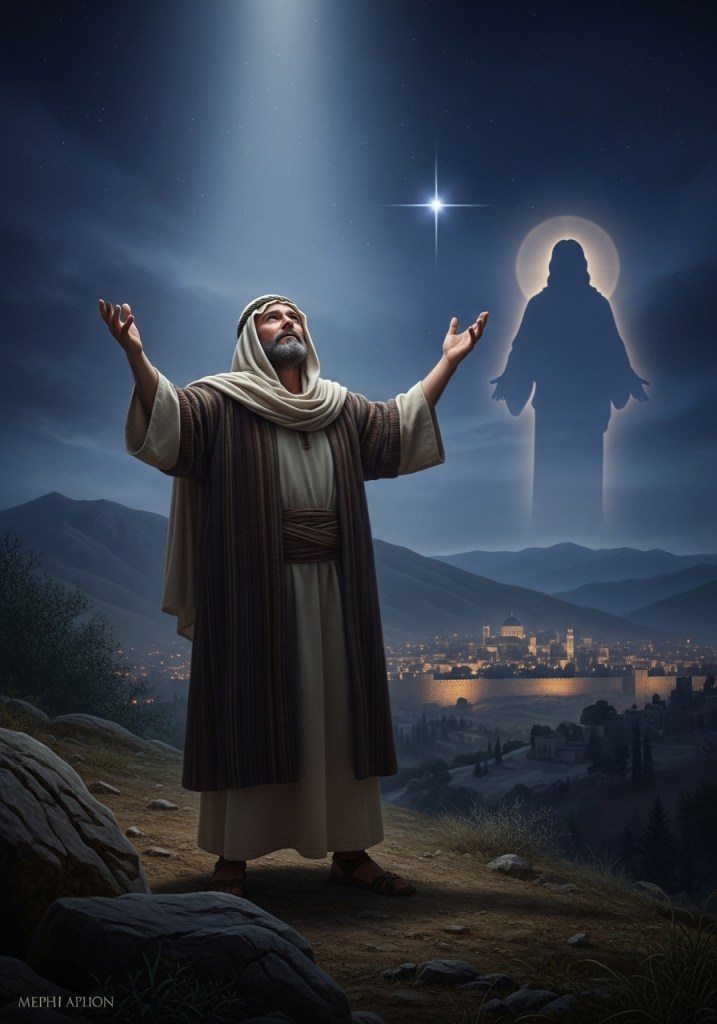
1 Nephi, chapter 10
Lehi predicts that the Jews will be taken captive by the Babylonians. He tells of the coming among the Jews of a Messiah, a Savior, a Redeemer. Lehi also tells of the coming of the one who should baptize the Lamb of God. Lehi tells of the death and resurrection of the Messiah. He compares the scattering and gathering of Israel to an olive tree. Nephi speaks of the Son of God, of the gift of the Holy Ghost, and of the need for righteousness. About 600-592 B.C.
1: “And now I, Nephi, proceed to give an account upon the plates of my proceedings, and my reign and ministry; wherefore, to proceed with mine account, I must speak somewhat of the things of my father, and also of my brethren.”
2: “For behold, it came to pass after my father had made an end of speaking the words of his dream, and also of exhorting them to all diligence, he spake unto them concerning the Jews–“
3: “That they should be destroyed, even that great city Jerusalem, and many be carried away captive into Babylon, according to the own due time of the Lord, they should return again, yeah, even be brought back out of captivity; and after they should be brought back out of captivity they should possess again the land of their inheritance.”
Isaiah 39:6-7 predicts “all that is in hour house…shall be carried to Babylon; nothing shall be left” and “… some of your sons… shall be taken away; and they shall become officials in the palace of the king of Babylon.” Jeremiah 25:11-12 is more specific, saying they would be exiled for 70 years. The prophesy of their return was fulfilled when King Cyrus of Persia allowed the exiled Judeans to return to Jerusalem and build the second temple.
4: “Yea, even six hundred years from the time that my father left Jerusalem, a prophet would the Lord God raise up among the Jews– even a Messiah, or, in other words, a Savior of the world.”
5: “And he also spake concerning the prophets, how great a number had testified of these things, concerning this Messiah, of whom he had spoken, or the Redeemer of the world.”
6: “Wherefore, all mankind were in a lost and in a fallen state, and ever would they be save they should rely on this Redeemer.”
Isaiah 7:14 predicts the Virgin Birth and his name would be Immanuel, which means “God with us.” Isaiah 11:1 and Jeremiah 23:5-6 both prophesied that Christ would be a descendant of David. Micah 5:2 tells us his birth will be in Bethlehem. The whole chapter of Isaiah 53 describes Christ as a suffering servant who was “pierced through for our transgressions.” It goes into great detail describing the weight of everyone’s sins and the atonement. Psalm 22 also predicts his suffering, opening with the well-known phrase Jesus said on the cross, “My God, my God, why hast Thou forsaken me?” The chapter goes on to describe the suffering: “They pierced my hands and my feet… They divide my garments among them, and for my clothing they cast lots.” See Matthew 27:35 and John 19:23-24 to see the fulfillment of that prediction. His resurrection is also foretold in Psalm 16:10, Isaiah 53, and Hosea 6:1-2. These are only a few of MANY prophecies concerning Christ. Listing them all would require more time than I have, but you should get the idea. What’s strange to note here are the terms the Book of Mormon uses to prophesy concerning Jesus. “Redeemer” is not used in any Old Testament predictions of his coming. Neither is “savior.” While these words are used to describe God, they are not applied specifically to Jesus until the New Testament.
7: “And he spake also concerning a prophet who should come before the Messiah, to prepare the way of the Lord–“
8: “Yea, even he should go forth and cry in the wilderness: Prepare ye the way of the Lord, and make his paths straight; for there standeth one among you whom ye know not; and he is mightier than I, whose shoe’s latchet I am not worthy to unloose. And much spake my father concerning this thing.”
Isaiah 40:3-4 alludes to John the Baptist as a voice calling out to prepare the way for the Lord. Malachi 3:1 also speaks of a messenger coming before the Messiah. However, it is not prophesied that he will refer to him as someone “whose shoe’s latchet I am not worthy to unloose.” That does not appear until the New Testament. See John 1:27, Matthew 3:11, and Mark 1:7.
9: “And my father said he should baptize in Bethabara, beyond the Jordan; and he also said he should baptize with water; even that he should baptize the Messiah with water.”
10: “And after he had baptized the Messiah with water, he should behold and bear record that he had just baptized the Lamb of God, who should take away the sins of the world.”
Jesus’ baptism was not explicitly foretold in any Old Testament prophecies. It was not described as a physical baptism of water, but as a pouring out of the Spirit. This can be seen in Isaiah 11:2 and again in 42:1. It is also described in Psalm 2:7. No baptism appears in any of these descriptions, much less the geographical location where it would take place. It’s also important to note that while a sacrificial lamb was a theme throughout the Old Testament and is mentioned in Isaiah 53:7, he is not once referred to as “Lamb of God” at any time in any of these verses. That is another phrase that is not used until the New Testament.
11: “And it came to pass after my father had spoken these words he spake unto my brethren concerning the gospel which should be preached among the Jews, and also concerning the dwindling of the Jews in unbelief. And after they had slain the Messiah, who should come, and after he had been slain he should rise from the dead, and should make himself manifest, by the Holy Ghost, unto the Gentiles.”
The death and resurrection are the only things prophesied here in the Old Testament. Everything else is simply a description of what took place in the New Testament.
12: “Yea, even my father spake much concerning the Gentiles, and also concerning the house of Israel, that they should be compared like unto an olive tree, whose branches should be broken off and should be scattered upon all the face of the earth.”
13: “Wherefore, he said it must needs be that we should be led with one accord into the land of promise, unto the fulfilling of the word of the Lord, that we should be scattered upon all the face of the earth.”
14: “And after the house of Israel should be scattered they should be gathered together again; or, in fine, after the Gentiles had received the fulness of the Gospel, the natural branches of the olive tree, or the remnants of the house of Israel, should be grafted in, or come to the knowledge of the true Messiah, their Lord and their Redeemer.”
This analogy never appears in the Old Testament. See Romans 11. It is true that the Jews are compared to an olive tree, and some branches are broken off due to unbelief. Unlike this passage in the Book of Mormon, however, it is the Gentiles who are grafted in, NOT the remnants of Israel. While it does later say they can be grafted back in if they turn from their unbelief, it isn’t a guarantee just because they’re Jews. So, not only does it appear that Smith plagiarized Romans 11, he plagiarized it incorrectly. The rest of 1 Nephi Chapter 10 goes on to describe how Nephi is desirous to know prophecies like his father. I’d like to point out verse 18, however.
18: “For he is the same yesterday, today, and forever; and the way is prepared for all men from the foundation of the world, if it so be that they repent and come unto him.”
Malachi 3:6 declares, “For I, the Lord, do not change…” Hebrews 13:8 also states Jesus’ unchanging nature. This is important because in order for the Book of Mormon to be from God, He would have had to make exceptions to His laws and nature that are well-documented in the Bible. You can see my previous posts for examples of this. Also, Ephesians 1:4 states we were chosen before the foundation of the world, not “at the foundation of the world” as verse 18 states.
I am unsure of how all of these inconsistencies can be justified in a person’s mind. I’m assuming LDS members would simply brush all of these aside or explain them all away through sloppy hermeneutics. But how much is too much? I’m only ten chapters in. How much is a book allowed to contradict the Bible before someone decides that it’s worth truly examining their own beliefs and presuppositions about the Bible?
 The Inquisitive Christian
Leave a comment