
The charge of racism in LDS theology and history has long been a topic of discussion. Based upon my previous post on 1 Nephi chapter 11 and now chapter 12, I think it’s fair to say the Book of Mormon reflects the racism of Joseph Smith’s time by associating whiteness with virtue and darkness with depravity, and there’s nothing subtle about this message. This will become more evident in this chapter and others. In addition to this, we will also see the Book of Mormon make claims that are not only not supported by evidence but contradict it outright. I could go down the rabbit hole with genetics and archeological findings in the Americas, but that will have to wait, as it is somewhat out of the scope of this particular chapter. Here we see Nephi record prophecies that involve his descendants and those of his brothers.
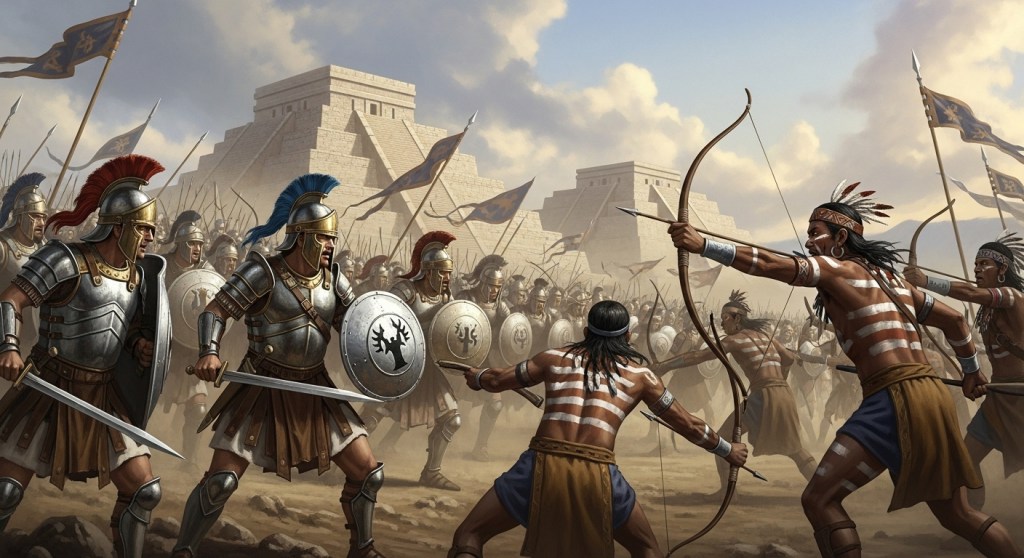
1 Nephi Chapter 12
Nephi sees in vision the land of promise; the righteousness, iniquity, and downfall of its inhabitants; the coming of the Lamb of God among them; how the Twelve Disciples and the Twelve Apostles will judge Israel; and the loathsome and filthy state of those who dwindle in unbelief. About 600-592 B.C.
1: “And it came to pass that the angel said unto me: Look, and behold thy seed, and the seed of thy brethren. And I looked and beheld the land of promise; and I beheld the multitudes of people, yea, even as it were in number as many as the sand of the sea.”
In a previous post of mine, “An Implausible Discovery,” I point out that there was only one promised land in the Bible, and Nephi and his family would have already been living in it when this was purported to have been written. The “land of promise” mentioned here, of course, turns out to be America. Also, the phrase “as many as the sand of the sea” appears in the Old Testament when God promises Abraham of how numerous his descendants will be. See Genesis 22:17. So, it appears that’s another phrase taken from the Bible.
2: “And it came to pass that I beheld multitudes gathered together to battle, one against the other; and I beheld wars, and rumors of wars, and great slaughters with the sword among my people.”
The phrase “rumors of wars” is used by Jesus in discussing the end times (Matthew 24:6 and Mark 13:7), so it’s very strange that it’s used here in an Old Testament era.
3: “And it came to pass that I beheld many generations pass away, after the manner of wars and contentions in the land; and I beheld many cities, yea, even that I did not number them.”
4: “And it came to pass that I saw a mist of darkness on the face of the land of promise; and I saw lightnings, and I heard thunderings, and earthquakes, and all manner of tumultuous noises; and I saw the earth and the rocks, that they rent; and I saw mountains tumbling into pieces; and I saw the plains of the earth, that they were broken up; and I saw many cities that were sunk; and I saw many that were burned with fire; and I saw many that did tumble to the earth, because of the quaking thereof.”
If these things were true, there would be archeological evidence of these events. There is none. Anywhere. At all. I will happily delve more into this when these settlements and wars are discussed in much greater detail later on in the Book of Mormon.
5: “And it came to pass after I saw these things, I saw the vapor of darkness, that it passed from off the face of the earth; and behold, I saw multitudes who had not fallen because of the great and terrible judgment of the Lord.”
6: “And I saw the heavens open, and the Lamb of God descending out of heaven; and he came down and showed himself unto them.”
So, it’s being claimed that Jesus visited the USA. Ok, then.
7: “And I also saw and bear record that the Holy Ghost fell upon twelve others; and they were ordained of God, and chosen.”
8: “And the angel spake unto me, saying: Behold the twelve disciples of the Lamb, who are chosen to minister unto they seed.”
The claim here seems to be that God chose 12 additional disciples for a different continent. Even if one were to believe the Book of Mormon, what sense does this make? The Twelve Apostles in the New Testament accompanied Jesus during his ministry then continued preaching after his death and resurrection. If he really did appear to people on this continent, why would he need 12 more disciples, and why would he choose people who weren’t even a part of his original ministry? If any of this had actually happened, then the Book of Mormon would complement the Bible perfectly. There would be no inconsistencies, contradictions, or obvious plagiarisms. There would be many different manuscripts that would bear witness to the Book of Mormon and what it claims. But as we have seen thus far and will continue to see, there are problems galore. LDS theology is rife with unbiblical teachings.
9: “And he said unto me: Thou rememberest the twelve apostles of the Lamb? Behold they are they who shall judge the twelve tribes of Israel; wherefore, the twelve ministers of thy seed shall be judged of them; for ye are the house of Israel.”
There is no judgment by the Twelve Apostles in Scripture. The only reference we have of anyone besides God passing judgment is 1 Corinthians 6:23, when Paul asks, “Do you not know that the saints will judge the world? And do you not know that we are to judge angels?” This passage is cryptic, and there are several possible interpretations. However, the Bible makes it clear the God is the ultimate judge. See Romans 14:10-12, Hebrews 12:23, James 4:12, 2 Corinthians 5:10, and John 5:22. If all we have is a single, odd, cryptic verse in the New Testament implying Christians may play a role in judgement, it’s inconsistent with the Bible to claim the Apostles will judge Israel.
10: “And these twelve ministers who thou beholdest shall judge thy seed. And, behold, they are righteous forever; for because of their faith in the Lamb of God their garments are made white in his blood.”
11: “And the angel said unto me: Look! And I looked, and beheld three generations pass away in righteousness; and their garments were white even like unto the Lamb of God. And the angel said unto me: These are made white in the blood of the Lamb, because of their faith in him.”
12: “And I, Nephi, also saw many of the fourth generation who passed away in righteousness.”
Using whiteness to illustrate the purification from sins is often used in the Bible. It is used in a spiritual sense. See Isaiah 1:18, and Psalm 51:7. When used as a physical description, God is the subject. Daniel 7:9 describes the Ancient of Days and His “vesture was like white snow, and the hair of His head like pure wool.” Revelation 1:14 describes the hair of Jesus as “white like wool, as white as snow.” It is not used to describe skin color unless it’s talking about leprosy. It is never used to describe skin tone as a sign of virtue. This is an important concept for the end of this chapter.
Verses 13-19 describe the descendants of Nephi fighting against the descendants of his brothers.
20: “And it came to pass that I beheld, and saw the people of the seed of my brethren that they had overcome my seed; and they went forth in multitudes upon the face of the land.”
21: “And I saw them gathered together in multitudes; and I saw wars and rumors of wars among them; and in the wars and rumors of wars I saw many generations pass away.”
22: “And the angel said unto me: Behold these shall dwindle in unbelief.”
23: “And it came to pass that I beheld, after they had dwindled in unbelief they became a dark, and loathsome, and a filthy people, full of idleness and all manner of abominations.”
And with that, we Joseph Smith’s thoughts on Indigenous people. There is no other way to read this. If he believed that ancient Jews migrated to the Americas, then he believed they were the ancestors of Native Americans, which he is describing here. This absolutely reflects the attitudes of white people towards Native Americans at that time, who were widely known as “savages.” Charming.
 The Inquisitive Christian
Leave a comment