
This morning, I had one Mormon tell me, online, that he could see the hate in my eyes and another one, who refused to read this blog, label it as “the words of Satan.” I found those criticisms quite funny, because they simply demonstrated what way too many LDS followers are conditioned to do from an early age: label anything even remotely critical as “hate” and “from Satan.” Those accusations are often lobbed at people with no qualifying data to back them up. It’s the height of intellectual laziness and dishonesty. If you can simply label something right out of the gate as “hate,” “anti-Mormon,” or “a lie from Satan,” then it absolves you of the responsibility of looking into what someone is claiming. I’m going to keep writing this blog as I see fit, and I’m not sorry. Now, onto the topic of today.
Anyone who has read this blog for any length of time has probably noticed that I’ll summarize some repetitive verses rather than type them out. I’m not doing that this time. Why? Because the fruits of people’s loins are mentioned 20 times in a chapter with 25 verses, and if I had to read all of them, then so do all of you. Out of the kindness of my heart, I have italicized these phrases so you can also count them and wonder if this was written by a 6th grader with Tourette’s.
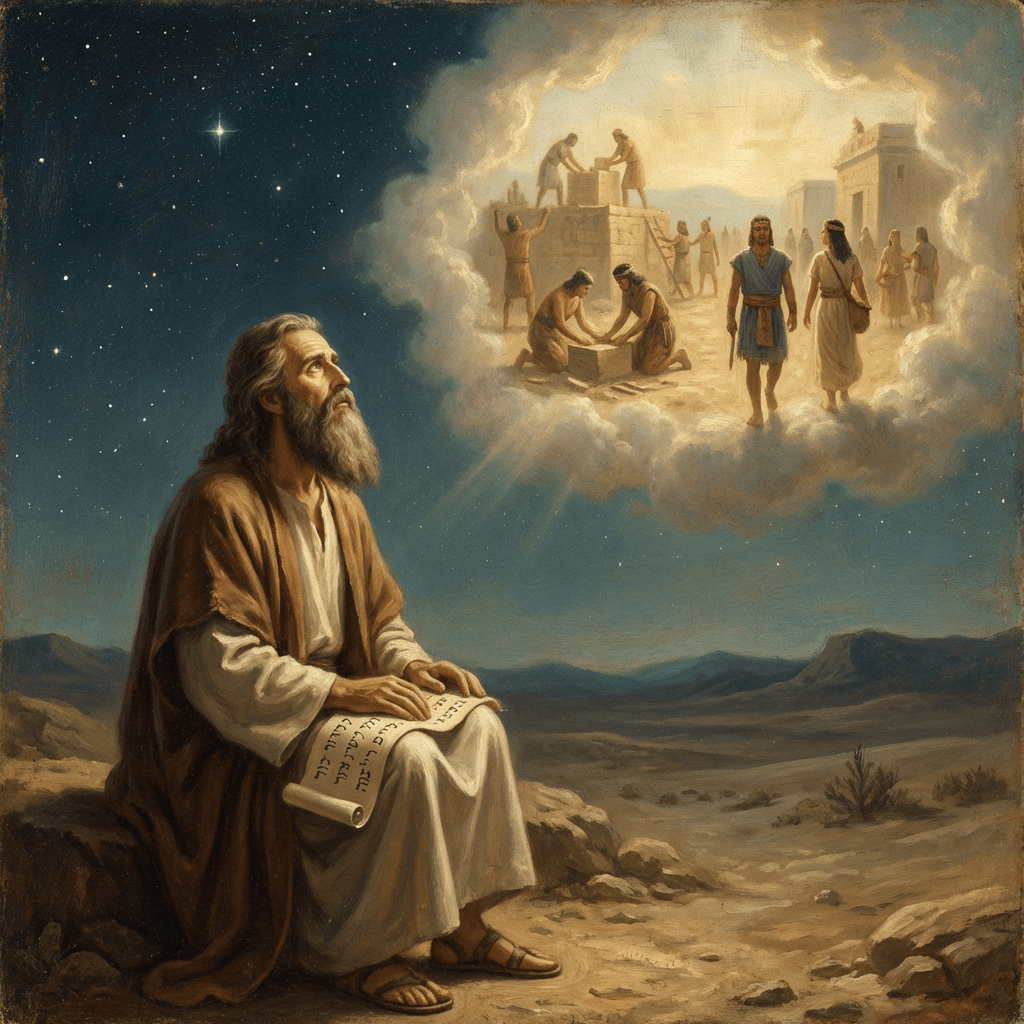
2 Nephi Chapter 3
Joseph in Egypt saw the Nephites in vision—He prophesied of Joseph Smith, the latter-day seer; of Moses, who would deliver Israel; and of the coming forth of the Book of Mormon. About 588–570 B.C.
1: “And now I speak unto you, Joseph, my last-born. Thou wast born in the wilderness of mine afflictions; yea, in the days of my greatest sorrow did thy mother bear thee.”
2: “And may the Lord consecrate also unto thee this land, which is a most precious land, for thine inheritance and the inheritance of thy seed with thy brethren, for thy security forever, if it so be that ye shall keep the commandments of the Holy One of Israel.”
The Americas were not consecrated to ancient Hebrews. This should go without saying. I have already demonstrated and cited research in previous posts that indigenous tribes were in the Americas thousands of years before Nephi and his family supposedly arrived. In “An Implausible Discovery,” I also go into more detail about how the ancient Hebrews only had one promised land. There were no additional ones.
3: “And now, Joseph, my last-born, whom I have brought out of the wilderness of mine afflictions, may the Lord bless thee forever, for thy seed shall not utterly be destroyed.”
4: “For behold, thou art the fruit of my loins; and I am a descendant of Joseph who was carried captive into Egypt. And great were the covenants of the Lord which he made unto Joseph.”
These covenants can be found in Genesis 41:52, 48:21, and 50:24-25.
5: “Wherefore, Joseph truly saw our day. And he obtained a promise of the Lord, that out of the fruit of his loins the Lord God would raise up a righteous branch unto the house of Israel; not the Messiah, but a branch which was to be broken off, nevertheless, to be remembered in the covenants of the Lord that the Messiah should be made manifest unto them in the latter days, in the spirit of power, unto the bringing of them out of darkness unto light—yea, out of hidden darkness and out of captivity unto freedom.”
No, absolutely none of this took place. Joseph did not see any visions of any of the people in the Book of Mormon. If this were true, it would have been in in ancient manuscripts of the Old Testament. No such passages exist.
6: “For Joseph truly testified, saying: A seer shall the Lord my God raise up, who shall be a choice seer unto the fruit of my loins.”
7: “Yea, Joseph truly said: Thus saith the Lord unto me: A choice seer will I raise up out of the fruit of thy loins; and he shall be esteemed highly among the fruit of thy loins. And unto him will I give commandment that he shall do a work for the fruit of thy loins, his brethren, which shall be of great worth unto them, even to the bringing of them to the knowledge of the covenants which I have made with thy fathers.”
That’s right, folks. Not only did Joseph Smith have an unhealthy obsession with other people’s loins, but he uncovered quite the grand prophecy of himself. Written on plates no one ever saw. That only he was able to translate. That an angel conveniently took back to heaven. That have never been seen since.
8: “And I will give unto him a commandment that he shall do none other work, save the work which I shall command him. And I will make him great in mine eyes; for he shall do my work.”
What work might that be? Fleecing people out of their money (A History of Joseph Smith’s Financial Malfeasance (Pt. 1) – BOOK OF MORMONISM)? Marrying teenage girls and other men’s wives (Joseph Smith’s Polygamy – Yale University Press)? Or would it be burning down a printing press because he didn’t like what they were printing (Joseph Smith’s Order to Destroy the Nauvoo Expositor (June 10, 1844)?
9 “And he shall be great like unto Moses, whom I have said I would raise up unto you, to deliver my people, O house of Israel.”
Only an egomaniac of the highest order would write a prophesy about himself and compare himself to Moses.
10: “And Moses will I raise up, to deliver thy people out of the land of Egypt.”
Oh, yeah. That guy. But back to the real star:
11: “But a seer will I raise up out of the fruit of thy loins; and unto him will I give power to bring forth my word unto the seed of thy loins—and not to the bringing forth my word only, saith the Lord, but to the convincing them of my word, which shall have already gone forth among them.
12: “Wherefore, the fruit of thy loins shall write; and the fruit of the loins of Judah shall write; and that which shall be written by the fruit of thy loins, and also that which shall be written by the fruit of the loins of Judah, shall grow together, unto the confounding of false doctrines and laying down of contentions, and establishing peace among the fruit of thy loins, and bringing them to the knowledge of their fathers in the latter days, and also to the knowledge of my covenants, saith the Lord.”
Sir, this is a Wendy’s.
13: “And out of weakness he shall be made strong, in that day when my work shall commence among all my people, unto the restoring thee, O house of Israel, saith the Lord.”
14: “And thus prophesied Joseph, saying: Behold, that seer will the Lord bless; and they that seek to destroy him shall be confounded; for this promise, which I have obtained of the Lord, of the fruit of my loins, shall be fulfilled. Behold, I am sure of the fulfilling of this promise;”
Nobody was confounded in the angry mob that killed Joseph Smith when he was in the Carthage Jail. And no, he wasn’t a martyr, as Mormon apologists insist. He was not jailed or killed for being Mormon. He was jailed for burning down the Nauvoo Expositor newspaper and for treason, and he was killed because his morally bankrupt practices had come to light. For more information, see: American Prophet: The Story of Joseph Smith and Final Moments at Carthage Jail and the Death of Joseph Smith – Mormonism Research Ministry.
15: “And his name shall be called after me; and it shall be after the name of his father. And he shall be like unto me; for the thing, which the Lord shall bring forth by his hand, by the power of the Lord shall bring my people unto salvation.”
Salvation can never be found in a religion that contains so many lies, especially lies about God (see my previous post “Thanks, I Hate it” for more details on that).
16: “Yea, thus prophesied Joseph: I am sure of this thing, even as I am sure of the promise of Moses; for the Lord hath said unto me, I will preserve thy seed forever.”
The Lord said no such thing.
17: “And the Lord hath said: I will raise up a Moses; and I will give power unto him in a rod; and I will give judgment unto him in writing. Yet I will not loose his tongue, that he shall speak much, for I will not make him mighty in speaking. But I will write unto him my law, by the finger of mine own hand; and I will make a spokesman for him.”
18: “And the Lord said unto me also: I will raise up unto the fruit of thy loins; and I will make for him a spokesman. And I, behold, I will give unto him that he shall write the writing of the fruit of thy loins, unto the fruit of thy loins; and the spokesman of thy loins shall declare it.”
Smith wanted to be Moses so badly that he also wrote a prophecy about his very own Aaron. Most Mormons interpret this to mean Oliver Cowdery, who served as one of Smith’s scribes while writing the Book of Mormon. See Exodus 6:28-7:2 to see what I mean.
19: “And the words which he shall write shall be the words which are expedient in my wisdom should go forth unto the fruit of thy loins. And it shall be as if the fruit of thy loins had cried unto them from the dust; for I know their faith.”
20: “And they shall cry from the dust; yea, even repentance unto their brethren, even after many generations have gone by them. And it shall come to pass that their cry shall go, even according to the simpleness of their words.”
So, this is a prophecy about the Book of Mormon. Written in the Book of Mormon… and nowhere else in history.
21: “Because of their faith their words shall proceed forth out of my mouth unto their brethren who are the fruit of thy loins; and the weakness of their words will I make strong in their faith, unto the remembering of my covenant which I made unto thy fathers.”
22: “And now, behold, my son Joseph, after this manner did my father of old prophesy.”
No one prophesied any of this.
23: “Wherefore, because of this covenant thou art blessed; for thy seed shall not be destroyed, for they shall hearken unto the words of the book.”
24: “And there shall rise up one mighty among them, who shall do much good, both in word and in deed, being an instrument in the hands of God, with exceeding faith, to work mighty wonders, and do that thing which is great in the sight of God, unto the bringing to pass much restoration unto the house of Israel, and unto the seed of thy brethren.”
Someone certainly had high opinions of himself. See Delusional Disorder for more information.
25: “And now, blessed art thou, Joseph. Behold, thou art little; wherefore hearken unto the words of thy brother, Nephi, and it shall be done unto thee even according to the words which I have spoken. Remember the words of thy dying father. Amen.”
You know what? I’m not even mad at this mess. I can’t take this chapter seriously enough to get upset over it. I think Mark Twain described it best when he declared it to be “chloroform in print.” This delightful description, as well as his other opinions on the Book of Mormon, are found in chapter 16 of his book “Roughing It,” which you can read here: MT on the Mormons.
If I never read the phrase “fruit of thy loins” or any other variation again, I’ll consider it a win.
 The Inquisitive Christian
Leave a comment