
Ladies and gents, I stand accused of being biased in my research and not taking the Book of Mormon seriously. These accusations, of course, were made by an unhappy Mormon who read a couple of my entries. Namely, he was upset by my support for the Deutero-Isaiah theory in “A Chronological Impossibility.” He insisted that it is only supported by secular scholars and therefore has no merit. He went further to complain that I presented it as indisputable fact when it isn’t. I will concede to this second point to a degree, as I am perfectly willing to admit that I didn’t make the best argument. It’s true that it is still a debated topic, but it is definitely not as unpopular as this gentleman purports it to be. I will be discussing this theory in a little more depth during this post and demonstrate why it is a reasonable theory, but I will also present arguments against it to be fair. His other grievance involved my entry titled, “Many Fruits. Many Loins,” which covers 2 Nephi 3, a chapter containing 25 verses with 20 mentions of the fruits of other people’s loins. He angrily said that I wasn’t trying to engage with the LDS scriptures seriously, to which I replied that I treated that chapter with the seriousness it deserved. On one hand, while I try to keep the overall tone of this blog calm, level-headed, and fair, it is a challenge to treat writings that contradict known history and the Bible in such outlandish ways with complete seriousness. On the other hand, I am trying to demonstrate the fault in the Book of Mormon in the hope that people will begin to study the Bible and come into a relationship with Christ, which is a very serious matter. It’s a bit of a battle trying to choose the right approach for each entry.
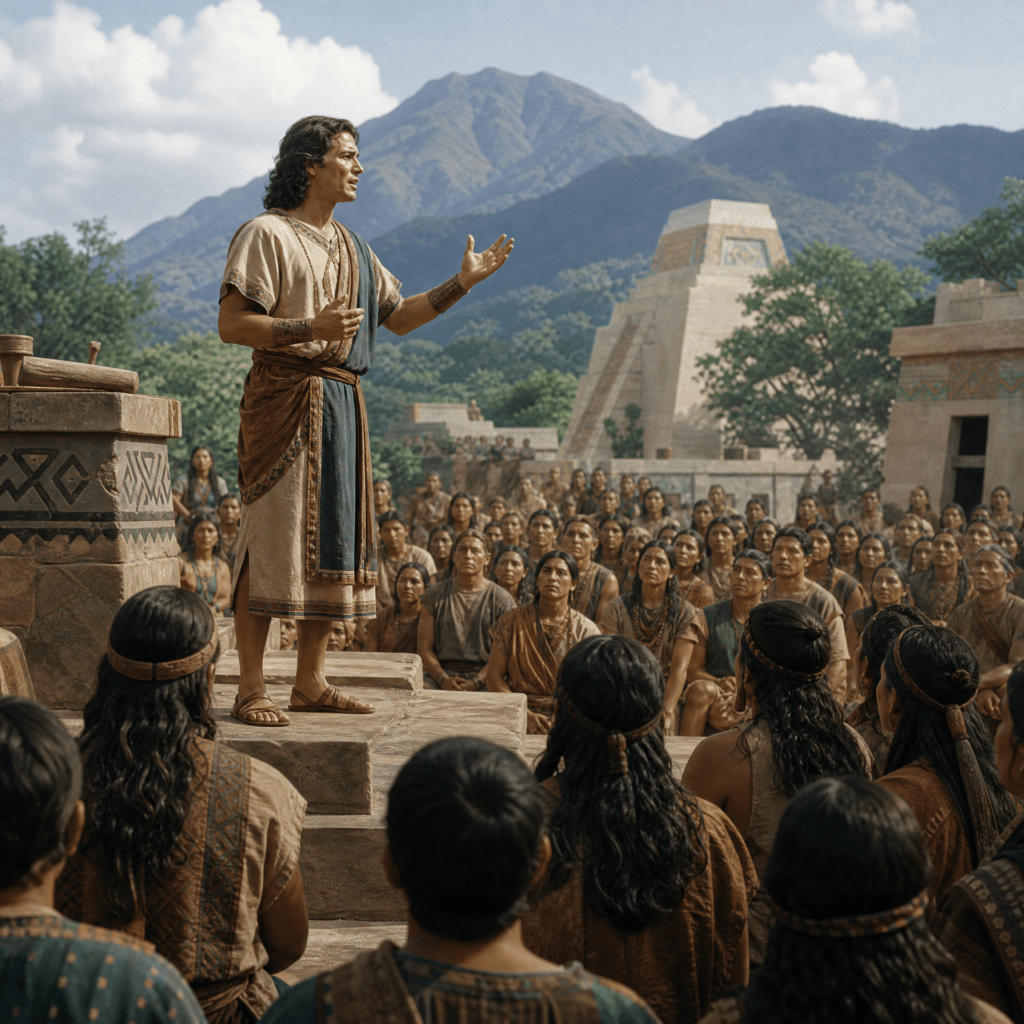
2 Nephi Chapter 6
Jacob recounts Jewish history: The Babylonian captivity and return; the ministry and crucifixion of the Holy One of Israel; the help received from the Gentiles; and the Jews’ latter-day restoration when they believe in the Messiah. About 559–545 B.C.
1: “The words of Jacob, the brother of Nephi, which he spake unto the people of Nephi:”
2: “Behold, my beloved brethren, I, Jacob, having been called of God, and ordained after the manner of his holy order, and having been consecrated by my brother Nephi, unto whom ye look as a king or a protector, and on whom ye depend for safety, behold ye know that I have spoken unto you exceedingly many things.”
3: “Nevertheless, I speak unto you again; for I am desirous for the welfare of your souls. Yea, mine anxiety is great for you; and ye yourselves know that it ever has been. For I have exhorted you with all diligence; and I have taught you the words of my father; and I have spoken unto you concerning all things which are written, from the creation of the world.”
4: “And now, behold, I would speak unto you concerning things which are, and which are to come; wherefore, I will read you the words of Isaiah. And they are the words which my brother has desired that I should speak unto you. And I speak unto you for your sakes, that ye may learn and glorify the name of your God.”
5: “And now, the words which I shall read are they which Isaiah spake concerning all the house of Israel; wherefore, they may be likened unto you, for ye are of the house of Israel. And there are many things which have been spoken by Isaiah which may be likened unto you, because ye are of the house of Israel.”
Turn in your Bibles to Isaiah 49. We’re going to do some comparisons.
6: “And now, these are the words: Thus saith the Lord God: Behold, I will lift up mine hand to the Gentiles, and set up my standard to the people; and they shall bring thy sons in their arms, and thy daughters shall be carried upon their shoulders.”
7: “And kings shall be thy nursing fathers, and their queens thy nursing mothers; they shall bow down to thee with their faces towards the earth, and lick up the dust of thy feet; and thou shalt know that I am the Lord; for they shall not be ashamed that wait for me.”
The KJV of Isaiah 49:22-23 says exactly the same thing. Here’s why this is a problem: Isaiah 40-66 may not have been written yet, and it’s being claimed these words are being read. To do a quick recap, Nephi states that he read Isaiah 48-49 from the brass plates in 1 Nephi 22. That chapter was purported to have taken place around 588-570 BC. In 1 Nephi 4, Nephi took these brass plates from Laban. The heading of that chapter states that took place about 600-592 B.C.
Historically, it is true that Christians and Jews alike believed that that the entire book of Isaiah was written by the prophet. That view maintains that Isaiah 40-66 were simply future prophecies he wrote that would take place after his death. There are scholars that still hold to this view and explain the evidence for different authors and time periods as his various writings and sermons being compiled over the years by other people, which is also plausible. They point to the oldest copy of Isaiah we have in the Dead Sea Scrolls, which was found as a single scroll. There are also New Testament passages that quote later chapters of Isaiah that attribute these chapters to Isaiah the prophet. The general consensus amongst most modern Biblical scholars, however, is that Isaiah 1-39 was written by Isaiah, and chapters 40-66 were written by other people. They did not arrive at this conclusion without good reason.
The first reason is that the narration of Isaiah chapters 40-55 strongly suggests an address to Israelites who are currently in captivity in Babylon. This is a jump of about 150 years after Isaiah 39, which prophesies the Babylonian captivity after King Hezekiah foolishly showed off all of his treasures to messengers from Babylon. Starting at chapter 40, the tone shifts from judgment-oriented to a comfort-oriented message. The kings that were alive during Isaiah’s life are not mentioned anymore from 40 on, and neither is Isaiah, unlike chapters 1-39. They Babylonian exile is often purported to have taken place at around 586 BC, with Deutero-Isaiah (or 2nd Isaiah, as some call it) roughly estimated to have been written between 550-538 BC. Another reason is the explicit mention of King Cyrus, who overthrew Babylon around 539 BC, in 44:28-45:6.
I would like to take the time to point out here that I have no reason to cling desperately to the theory that multiple authors may have composed Isaiah. While this theory seems to make a lot of sense and is believed by many scholars, the chance of it not being correct does not suddenly mean the Book of Mormon is true. There are plenty of reasons to view the Book of Mormon as incredibly inaccurate based upon numerous factors that you will find in my previous posts. Even if Isaiah did write the entire book by himself (which I will admit is definitely possible), the appearance of later chapters in the Book of Mormon is easily explained by plagiarism. The historicity of the Book of Mormon would be taken seriously by myself and many others had ancient manuscripts of it been found, but there aren’t any. All we have is the word of one man that all this was written on gold plates that aren’t around for anyone to examine.
For more information, see the following sources: Who Wrote the Book of Isaiah? | Zondervan Academic;Isaiah II – Religious Studies – Loras College Library at Loras College; Isaiah – The Society for Old Testament Study; Biblical literature – Isaiah, Prophecy, Poetry | Britannica; The Unity and Authorship of Isaiah: A Needless battle. These are all sources that are definitely worth checking out. If you want to see arguments in favor of a single author, which I recommend doing, see here: When, and by Whom, Was the Book of Isaiah Written? – Bible Authenticity and Authorship of Isaiah
8: “And now I, Jacob, would speak somewhat concerning these words. For behold, the Lord has shown me that those who were at Jerusalem, from whence we came, have been slain and carried away captive.”
9: “Nevertheless, the Lord has shown unto me that they should return again. And he also has shown unto me that the Lord God, the Holy One of Israel, should manifest himself unto them in the flesh; and after he should manifest himself they should scourge him and crucify him, according to the words of the angel who spake it unto me.”
Verse 9 is interesting, because it seems to support the Trinitarian view that Jesus was literally God incarnate. This contrasts with the LDS view of what they call the Godhead. Unlike Christians, who view the Father, Son, and Holy Spirit as three distinct, coeternal, coequal, coexisting persons that make up one being (God), the LDS describe the Godhead as three separate beings altogether. Where Christians view the Trinity as 3 persons that are one in substance, will, and purpose, the LDS view the Godhead as 3 beings that are one in will and purpose. You can see a summary of their view here: Godhead. The LDS view is, of course, heresy.
The Trinity is woven throughout all of Scripture, despite what anti-trinitarians claim. It begins in Genesis 1:1 with “In the beginning, God created the heavens and the earth.” The word used for God, “Elohim,” is the plural form of the Hebrew word for God. However, the Hebrew verb “created” is singular. Another hint at the Trinity appears in verse 26: “Then God said, Let Us make man in Our image, according to Our likeness…” There are some who argue that God may have been talking to the angels. That doesn’t hold water when you consider that only God is able to create. Why would he address the angels and say, “Let Us make…” when no one helped Him create anything? We also see the Holy Spirit in the Old Testament, though we see the title “Spirit of the Lord” instead of Holy Spirit. There is also a very compelling case to be made that “The Angel of the Lord” in the Old Testament is an early manifestation of Jesus. However, I’m trying to stay mostly on topic, and writing a serious defense of the Trinity would take more space in this post than I want to give it at this time.
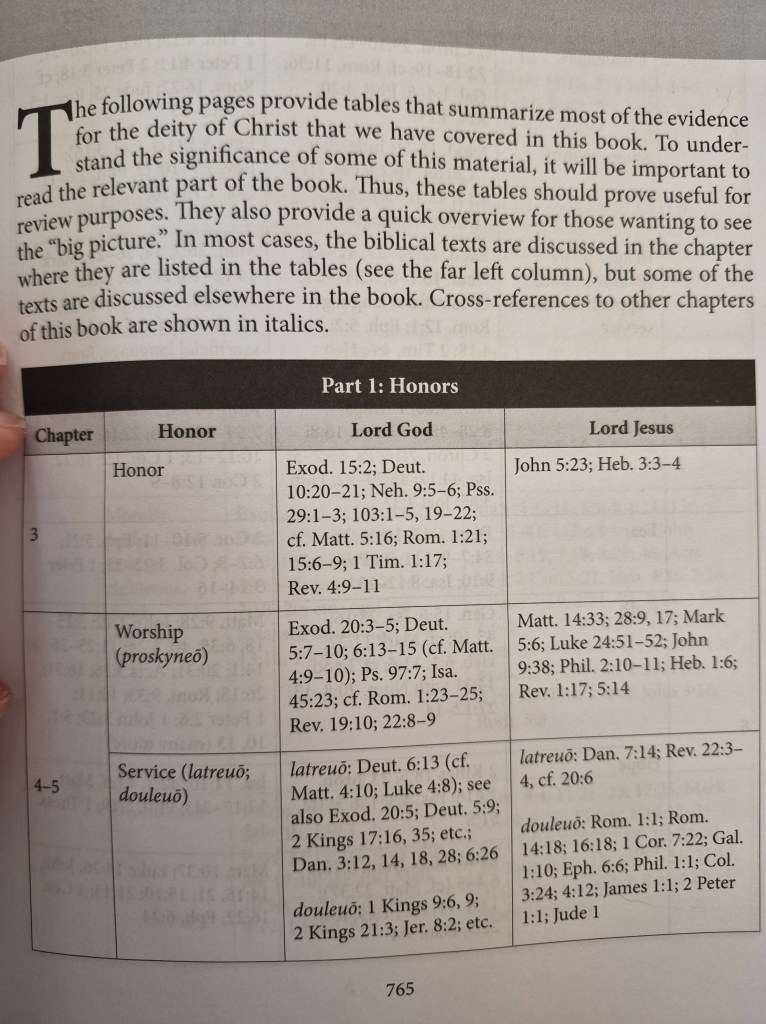
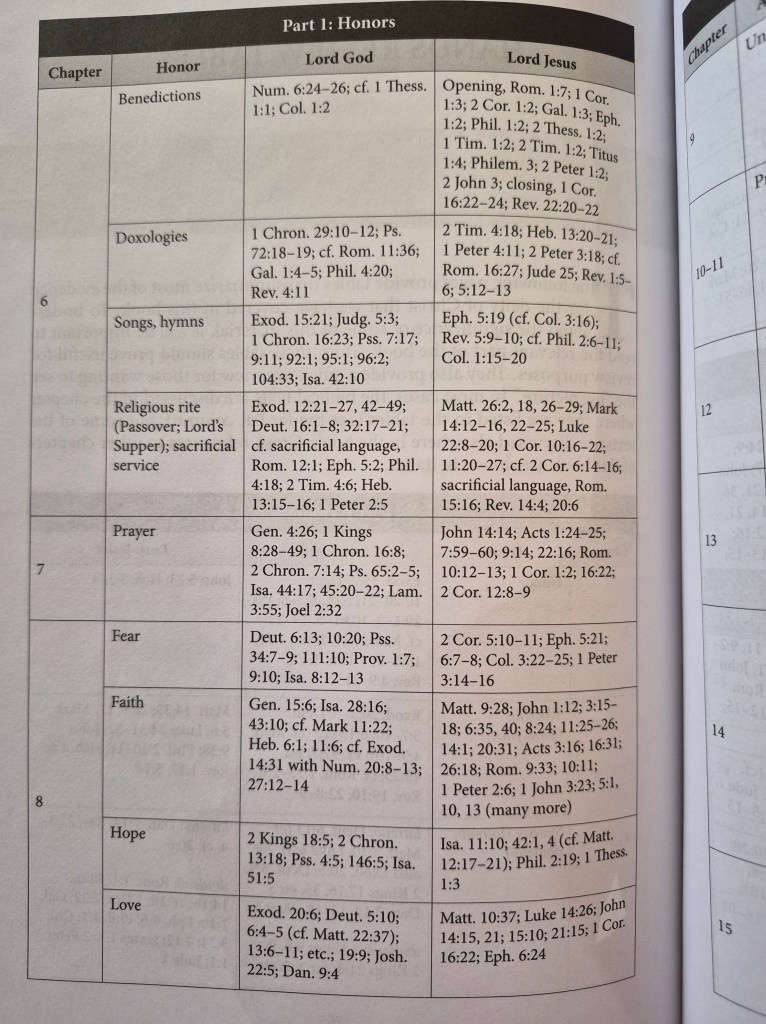
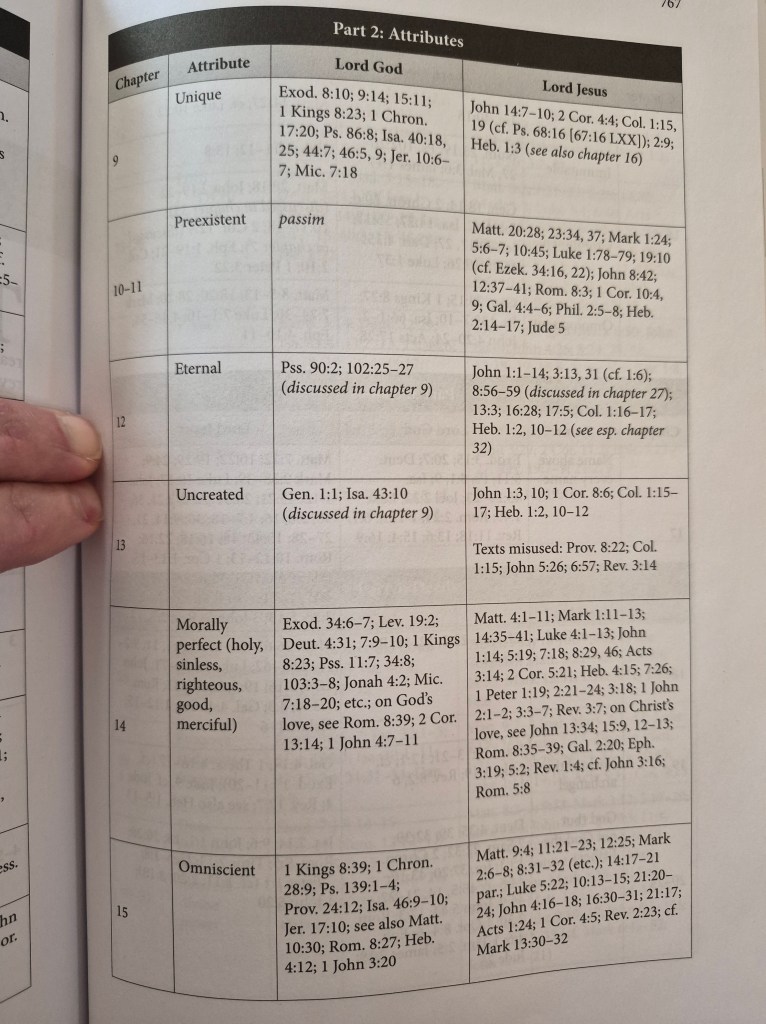
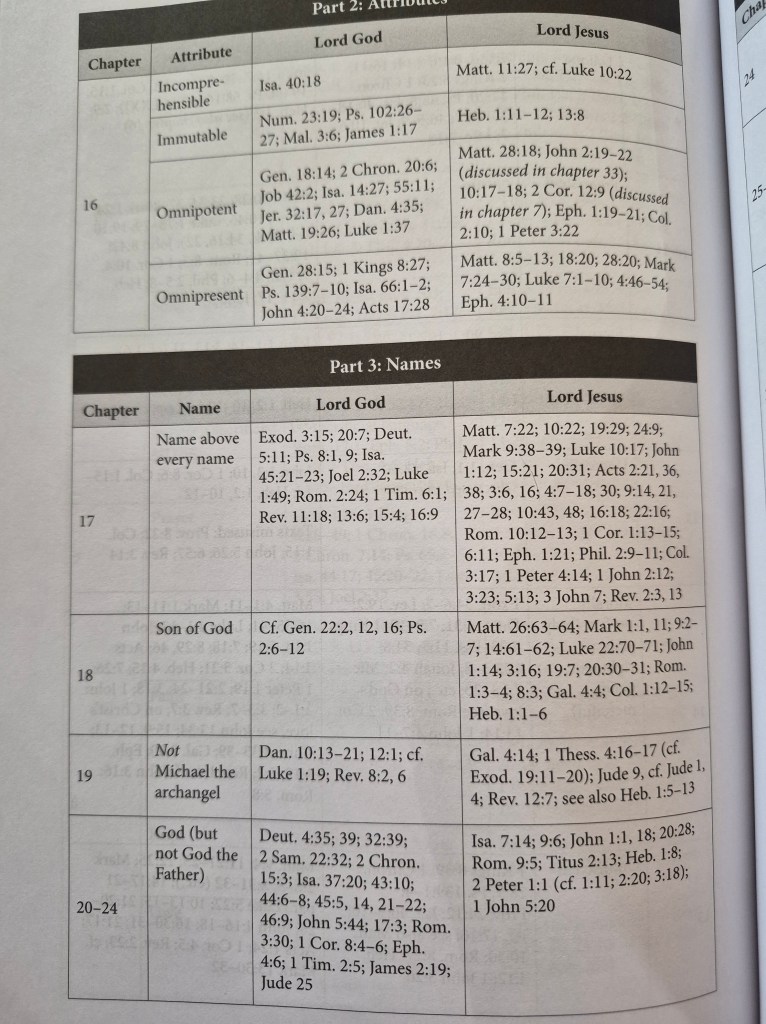
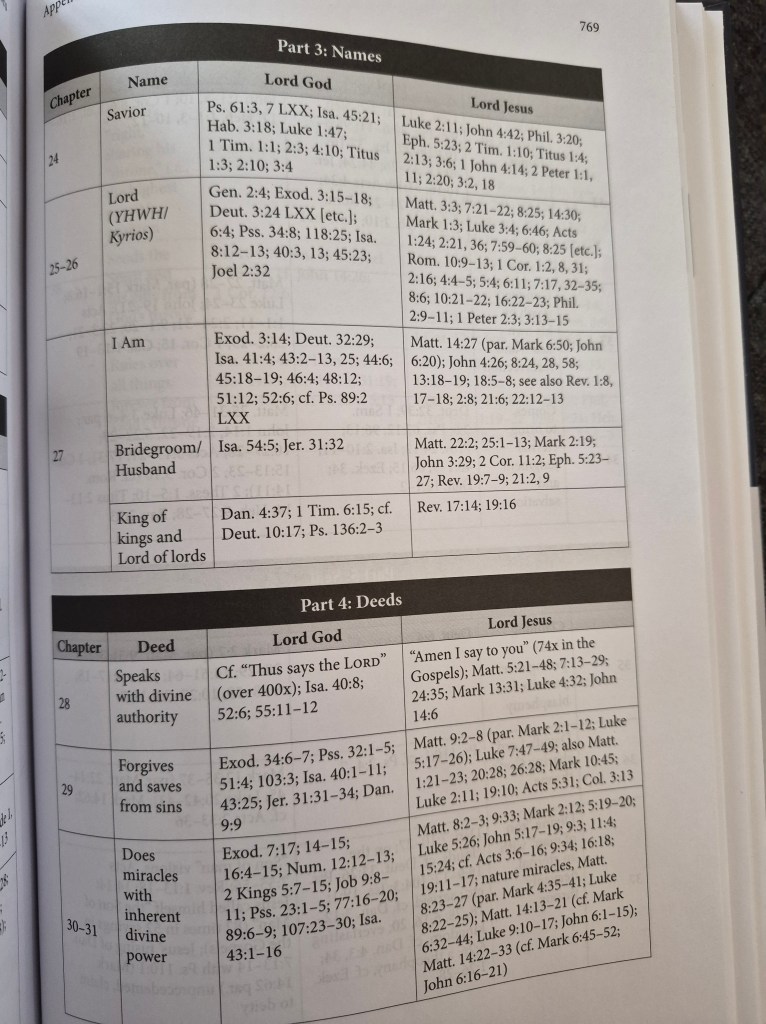
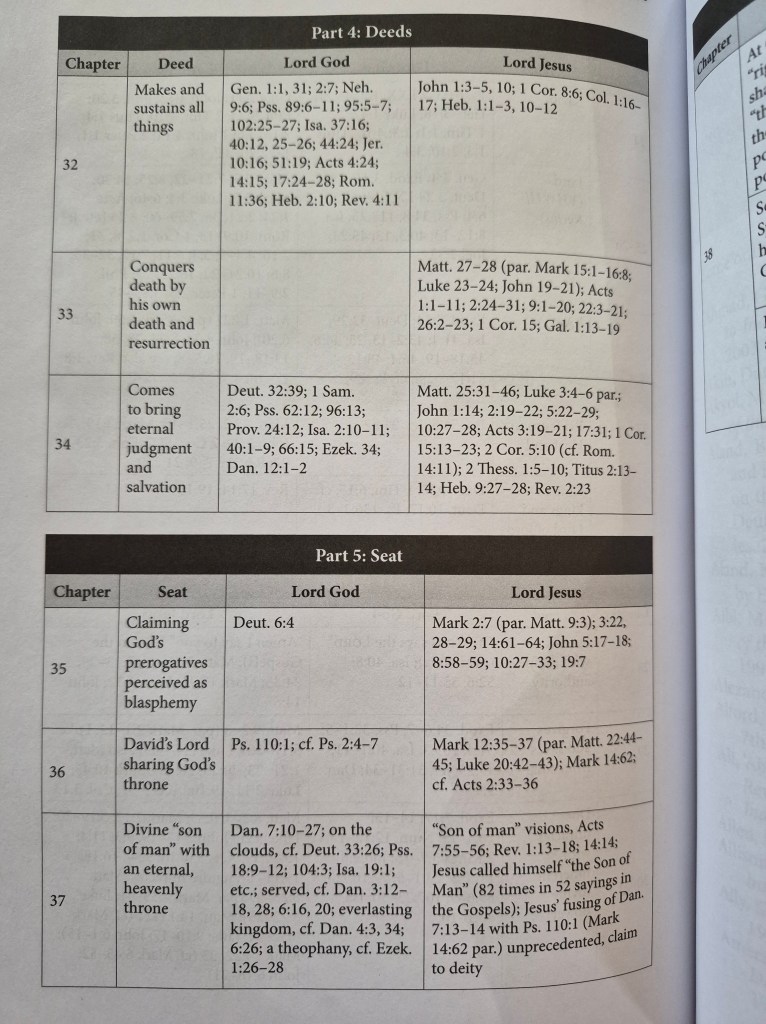
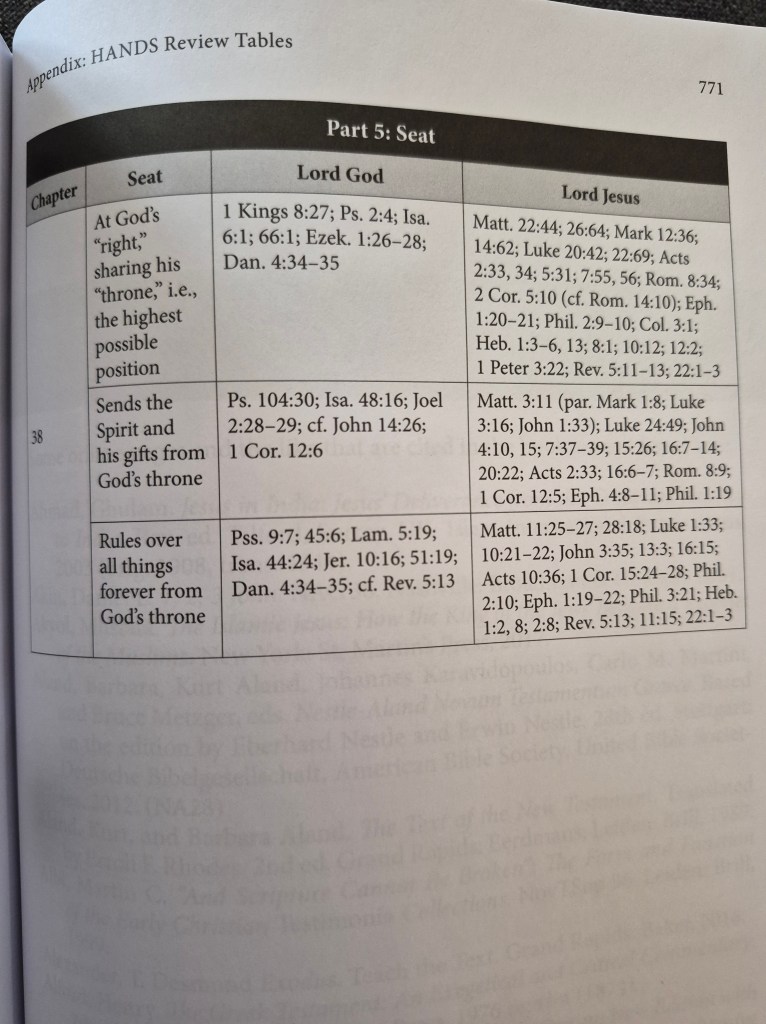
While the Trinity was not fully grasped until the New Testament, it is abundantly clear that the New Testament writers and Christians understood that Jesus was God incarnate and the second person of the Trinity. In their book, “The Incarnate Christ and His Critics,” authors Robert M. Bowman Jr. and Ed Komoszewski point to Biblical evidence of the divinity of Christ, and therefore the Trinity, with the helpful acronym “H.A.N.D.S.” They cite numerous Old Testament and New Testament passages that demonstrate Jesus receives the same honors that are given to God in the Old Testament. He has the same attributes in the New Testament that are ascribed to God in the Old Testament. He has the same names as God. He performs the same deeds as God, and he shares the seat with God. I would love to delve further into this excellent book, but it’s 763 pages. However, there is a dandy appendix in the back with a chart that shows the Bible verses used to support their position. Out of the kindness of my heart, I will take pictures of it and attach it to the end of this post.
The LDS church claims their idea of the Godhead is biblical, but that teaching was lost in what they call “The Great Apostasy,” which involved a loss of original Christian teachings when the apostles died. That idea has no basis in reality, which becomes more evident when you read the New Testament and see the continuation of those teachings in the writings of the Apostolic Fathers. A favorite claim that I often hear from Mormons and others is that the Trinity is a manmade doctrine that was brought forth with the Council of Nicaea in 325 AD and the subsequent Nicene Creed. This is nonsense, of course. The council was convened primarily to decide when to celebrate Easter and address heresies that were cropping up, namely Arianism, which posited that Jesus was created by God, which means Jesus is neither God incarnate nor equal to God the Father (sound familiar?). While we can certainly say the early church fathers grappled with the doctrine of the Trinity and were making attempts to explain it, to act like it was invented out of thin air at a council is absurd. The Nicene Creed was composed as a summary of belief to defend Christianity against heresies regarding who God is. For more information, see First Council of Nicaea | Christianity, Arianism, Ecumenical, History, Significance, & Facts | Britannica.
10: “And after they have hardened their hearts and stiffened their necks against the Holy One of Israel, behold, the judgments of the Holy One of Israel shall come upon them. And the day cometh that they shall be smitten and afflicted.”
11: “Wherefore, after they are driven to and fro, for thus saith the angel, many shall be afflicted in the flesh, and shall not be suffered to perish, because of the prayers of the faithful; they shall be scattered, and smitten, and hated; nevertheless, the Lord will be merciful unto them, that when they shall come to the knowledge of their Redeemer, they shall be gathered together again to the lands of their inheritance.”
These two verses are prophecies concerning the fate of the Israelites after the death and resurrection of Christ. The Old Testament has such prophecies, so this concept is nothing unique. The famous, albeit cryptic, “Seventy Weeks Prophecy” occurs in Daniel 9:24-27. In this prophecy, 1 day represents one year, so one “week” is 7 years. This prophecy, then, covers 490 years into the future. In it, Jerusalem is restored and the temple rebuilt (which took place when Cyrus allowed the Israelites to return and rebuild in 538 BC), Christ comes to earth and is crucified and resurrected, and the temple at Jerusalem is destroyed again. That destruction took place in 70 AD. For a fascinating and informative breakdown of this passage, see What Are the Seventy Weeks of Daniel? (Daniel 9) | Crossway.
Another interesting passage that discusses Israel’s future is Amos 9:9-15. This foretells the scattering of Isreal and destruction of sinners, then moves to prophesy Isreal’s restoration and the inclusion of the Gentiles in this restoration. There are several different interpretations of the very last verse: “I will also plant them on their land, and they will not again be rooted out from their land which I have given them,’ Says the Lord your God.” Some believe this is a literal promise that was fulfilled when Isreal became a nation in 1948. This seems strange, however, because the prosperity described in previous verses is not currently enjoyed by Isreal. Others think this prophecy hasn’t come to fruition because it’s conditional; Isreal never returned to God, so God did not give them this prosperity or land. However, there’s no indication in the language used in this passage that this is the case. Others view this promise as pertaining to the church or even heaven. No matter what view you hold, however, the point remains that there are clear prophecies regarding the future of the house of Israel after the death and resurrection of Jesus. For a breakdown of these different theories, see » “Never Again Uprooted From the Land” (Amos 9:15) John Mark Hicks. You can also veiw several commentaries on this passage here: Amos 9:15 Commentaries: “I will also plant them on their land, And they will not again be rooted out from their land Which I have given them,” Says the LORD your God.
12: “And blessed are the Gentiles, they of whom the prophet has written; for behold, if it so be that they shall repent and fight not against Zion, and do not unite themselves to that great and abominable church, they shall be saved; for the Lord God will fulfil his covenants which he has made unto his children; and for this cause the prophet has written these things.”
I covered this topic more extensively in “The Great and Abominable Church Revisited.” For the sake of space, I will summarize what the LDS church believes is the “great and abominable church”: Hellenized Christianity, as they like to call it. You can read that description here: “Nephi’s “Great and Abominable Church”” by Stephen E. Robinson. Commonly and gleefully declared by Mormons is the idea that the early church fathers were heavily influenced by Greek philosophy and that’s how core doctrines, such as the Trinity and creatio ex nihilo, came into being. In other words, any Bible-believing church is “great and abominable” to them. Also, as I’ve mentioned several times previously, the word “church” didn’t exist during the Old Testament. That is a strictly Christian concept that wasn’t formulated until the New Testament.
13: “Wherefore, they that fight against Zion and the covenant people of the Lord shall lick up the dust of their feet; and the people of the Lord shall not be ashamed. For the people of the Lord are they who wait for him; for they still wait for the coming of the Messiah.”
This seems to be more of a reiteration of verse 7.
14: “And behold, according to the words of the prophet, the Messiah will set himself again the second time to recover them; wherefore, he will manifest himself unto them in power and great glory, unto the destruction of their enemies, when that day cometh when they shall believe in him; and none will he destroy that believe in him.”
This is a loose retelling of Isaiah 11:11. Isaiah chapter 11 is an end-times prophecy that involves Christ’s reign on earth and the bringing back of all of Isreal to their original promised land. Obviously, this hasn’t taken place yet. It speaks of a time of peace on all the earth. Verse 9 promises “… For the earth will be full of the knowledge of the Lord.” Verse 11 states, “Then it will happen on that day that the Lord will again recover the second time with His hand the remnant of His people, who will remain, from Assyria, Egypt, Pathros, Cush, Elam, Shinar, Hamath, and from the islands of the sea.” Verses 15-16 even detail how God will make paths from Assyria for Israel to return. For a great breakdown of Isaiah 11, see What does Isaiah chapter 11 mean? | BibleRef.com
15: “And they that believe not in him shall be destroyed, both by fire, and by tempest, and by earthquakes, and by bloodshed, and by pestilence, and by famine. And they shall know that the Lord is God, the Holy One of Israel.”
There are numerous Old Testament prophecies regarding the end times that describe the absolute destruction that will take place. There’s a handy chart of some of these here: Old Testament Endtimes Prophecy Chart | Dwell Community Church | Dwell Community Church.
16: “For shall the prey be taken from the mighty, or the lawful captive delivered?”
Isaiah 49:24 “Shall the prey be taken from the mighty, or the lawful captive delivered?” (KJV)
17: “But thus saith the Lord: Even the captives of the mighty shall be taken away, and the prey of the terrible shall be delivered; for the Mighty God shall deliver his covenant people. For thus saith the Lord: I will contend with them that contendeth with thee—”
Isaiah 49:25: “ But thus saith the Lord, Even the captives of the mighty shall be taken away, and the prey of the terrible shall be delivered: for I will contend with him that contendeth with thee, and I will save thy children.” (KJV). I’ve noticed that the LDS church has a fixation on God’s “covenant people,” which is how they view themselves. This is evidenced by the adding of that phrase to this verse in Isaiah.
18: “And I will feed them that oppress thee, with their own flesh; and they shall be drunken with their own blood as with sweet wine; and all flesh shall know that I the Lord am thy Savior and thy Redeemer, the Mighty One of Jacob.”
Isaiah 49:25: “And I will feed them that oppress thee with their own flesh; and they shall be drunken with their own blood, as with sweet wine: and all flesh shall know that I the Lord am thy Saviour and thy Redeemer, the mighty One of Jacob.” (KJV).
I feel like I covered a lot of topics in this post. Then again, I seem to do that a lot. That’s because each chapter, for the most part, presents multiple problems. It’s like a theological game of whack-a-mole. I smack down one issue, and another one pops up in the next verse. I’m sure I will be continuing this pattern as I press on with this journey through the Book of Mormon.
As promised, here are the pictures of the chart from “The Incarnate Christ and His Critics”:
 The Inquisitive Christian
Leave a comment