The Inquisitive Christian

Questioning everything since 1984

  • 1 Nephi Chapter 2

    Lehi takes his family into the wilderness by the Red Sea– They leave their property– Lehi offers a sacrifice to the Lord and teaches his sons to keep the commandments– Laman and Lemuel murmur against their father– Nephi is obedient and prays in faith; the Lord speaks to him, and he is chosen to rule over his brethren. About 600 B.C.

    5: “And he came down by the borders near the shore of the Red Sea; and he traveled in the wilderness in the borders which are nearer the Red Sea; and he did travel in the wilderness with his family, which consisted of my mother, Sariah, and my elder brothers, who were Laman, Lemuel, and Sam.”

    This is one of many verses that are oddly repetitive. You will not find verses such as these in the Bible.

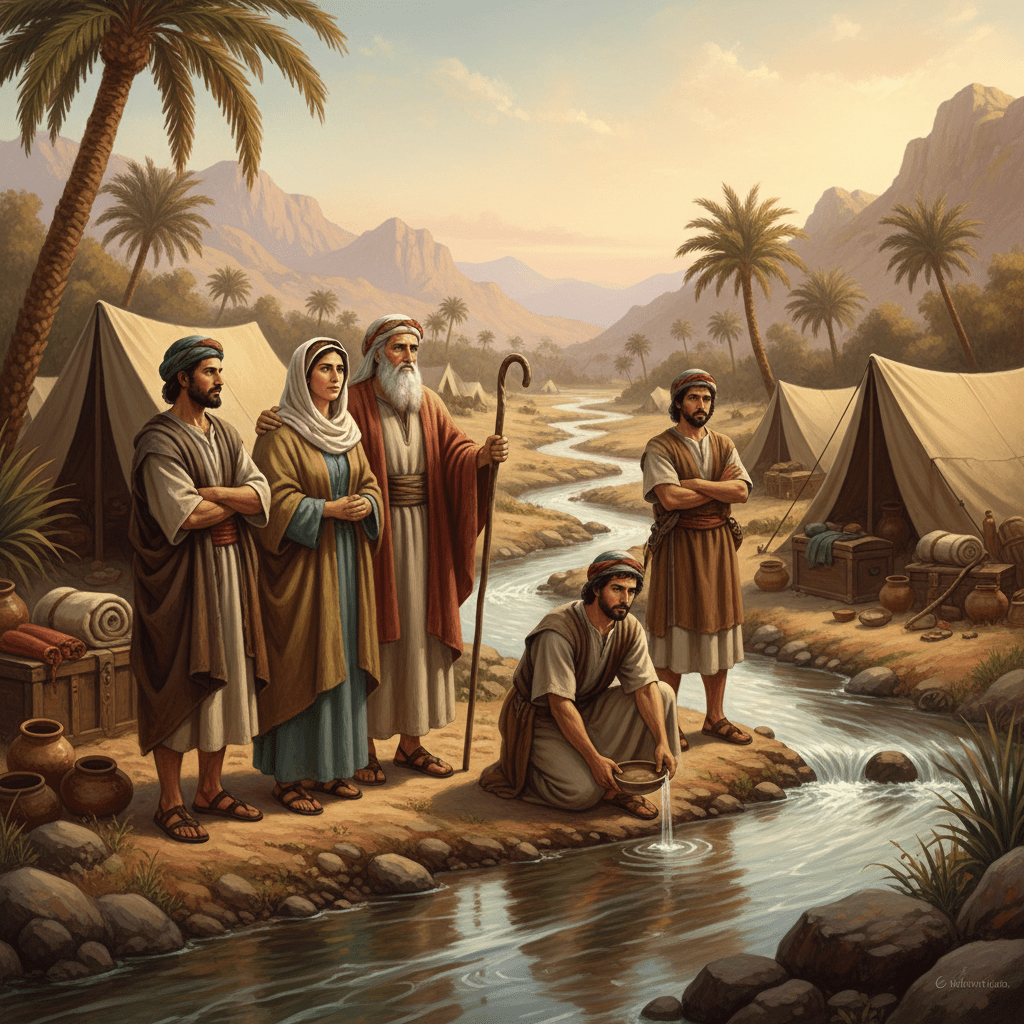
    6: “And it came to pass that when he had traveled three days in the wilderness, he pitched his tent in a valley by the side of a river of water.

    7: And it came to pass that he built an altar of stones, and made an offering unto the Lord, and gave thanks unto the Lord our God.

    8: And it came to pass that he called the name of the river, Laman, and it emptied into the Red Sea; and the valley was in the borders near the mouth thereof.

    9: And when my father saw that the waters of the river emptied into the fountain of the Red Sea, he spake unto Laman, saying: O that thou mightest be like unto this river, continually running into the fountain of all righteousness!”

    In the interest of fairness, I think I should mention my search for answers as to where this river and valley might be. I did a basic Google search, and I only found LDS sources. All of them talked about a chance discovery in 1995 by a pair of LDS researchers who got lost in Saudi Arabia trying to find a site known to locals as the Waters of Moses. Per their report, they wandered along the shoreline of the Gulf of Aqaba when they stumbled upon a “magnificent narrow canyon” which “ended in a palm-lined cove.” This place was Wadi Tayyib al-Ism, which is 74 miles south of Aqaba. They calculated this to be roughly a 3 days’ journey from Jerusalem, which would line up with the narrative in this chapter. The LDS considers this significant because “continually running” rivers have not been known to exist in Saudi Arabia. It was noted that the river flowing out of this canyon was more like a small stream. However, geography does change over time, so LDS researchers point out this stream could have been a river at one point and float the possibility that Saudi Arabia could have been wetter in ancient times. For more information, see https://scripturecentral.org/knowhy/have-the-valley-of-lemuel-and-the-river-of-laman-been-found.

    11: “…they did murmur against their father, because he was a visionary man, to leave the land of their inheritance…to perish in the wilderness.”

    This is oddly reminiscent of the Israelites angrily accusing Moses of leading them to the wilderness to die. (See Exodus 14:11).

    22: “And inasmuch as they brethren shall rebel against thee, they shall be cut off from the presence of the Lord.”

    This is also strangely reminiscent of another occurrence in the Old Testament: when Joseph was chosen to rule over his brothers. (See Genesis 37: 5-11). I’m beginning to notice a pattern here.

  • 1 Nephi Chapter 1

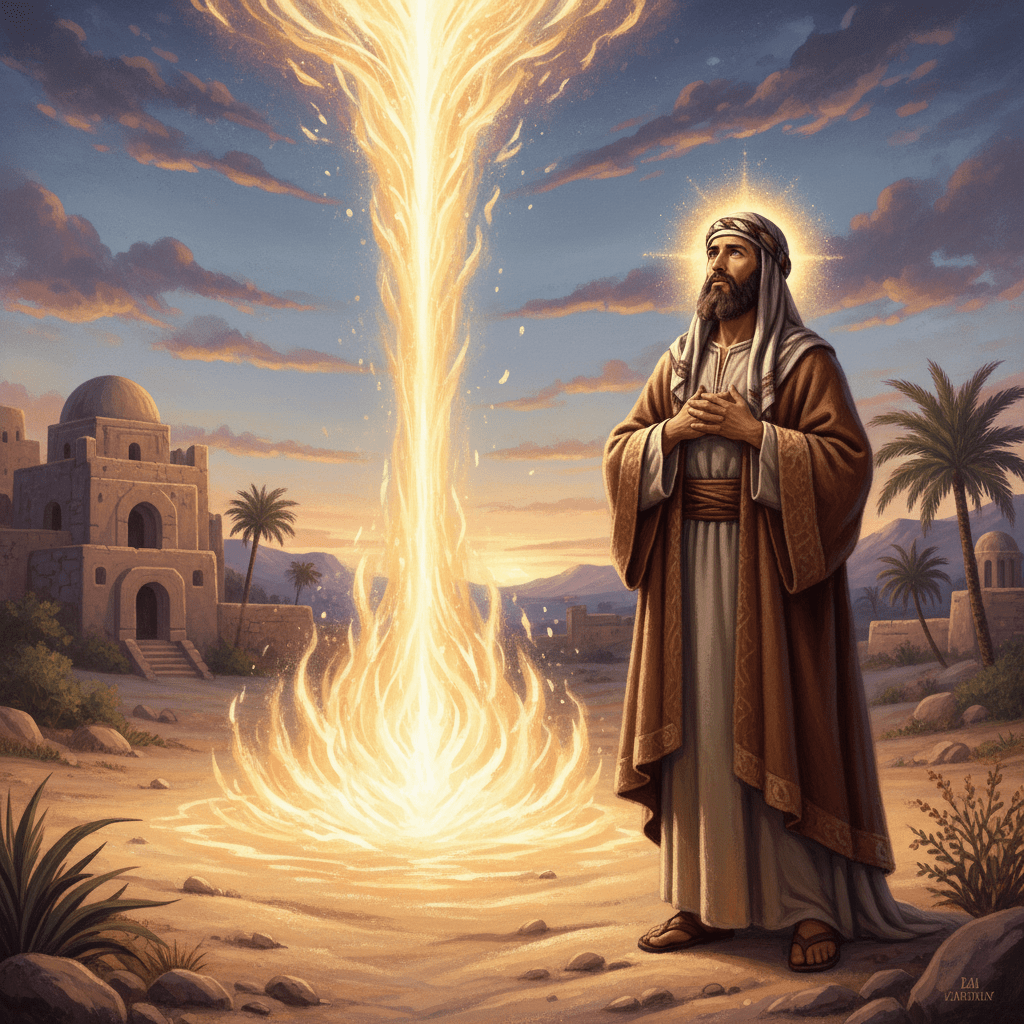
    Nephi begins the record of his people– Lehi sees in a vision a pillar of fire and reads from a book of prophecy– He praises God, foretells the coming of the Messiah, and prophecies the destruction of Jerusalem– He is persecuted by the Jews. About 600 B.C. 

    2: “Yea, I make a record in the language of my father, which consists of the learning of the Jews and the language of the Egyptians.”

    This does not make sense. They would have spoken and written in Hebrew. This book is purported to have been written in 600 B.C. The Israelites are traditionally believed to have left Egypt in 1446 B.C. There is no reason why a Hebrew would be recording anything in Egyptian after hundreds of years of being out of Egypt. Along this same vein, “Nephi” is not a Hebrew name. It’s commonly believed to be derived from the Egyptian language. Why would a Hebrew family give their son an Egyptian name?

    3: “And I know that the record which I make is true; and I make it with mine own hand; and I make it according to my knowledge.”

    This is an odd verse. Why write that something is true? Simply write what you were going to write. There are no verses like this in the Bible because it is assumed that whoever is reading it already knows it to be true.

  • I have chosen to first focus my efforts on the beliefs of the Church of Jesus Christ of Latter-Day Saints. They have four texts they consider sacred: the Bible, the Book of Mormon, The Doctrine and Covenants, and the Pearl of Great Price. I will be going through the Book of Mormon first with occasional side quests into the Doctrine and Covenants. I will be quoting passages of these texts followed by my own commentary. First, I have some observations regarding the introduction to the Book of Mormon and the statements of the witnesses.

    Introduction: “Concerning this record the Prophet Joseph Smith said, ‘I told the brethren that the Book of Mormon was the most correct of any book on earth, and the keystone of our religion, and a man would get nearer to God by abiding its precepts, than by any other book.”

    Here, we see Joseph Smith clearly elevates himself and the Book of Mormon above the authority of the Holy Bible.

    “We invite all men everywhere to read the Book of Mormon, to ponder in their hearts the message it contains, and then to ask God, the Eternal Father, in the name of Christ if this book is true. Those who pursue this course and ask in faith will gain a testimony of its truth and divinity by the power of the Holy Ghost. (See Moroni 10:3-5).

    First: God cannot be called “Eternal Father” if he was once a man, as Joseph Smith taught. Being a man means he had a beginning, which means he can’t be eternal. Second: This is not a reliable test of knowing if something is true or not. Anyone can declare that God told him that something is true. Feeling something in our hearts is no way to determine objective truth. On the contrary, Jeremiah 17:9 states, “The heart is more deceitful than all else and is desperately sick. Who can understand it? (NASB)” Furthermore, we are instructed in 1 John 4:1, “Beloved, do not believe every spirit, but test the spirits to see whether they are from God; because many false prophets have gone out into the world. (NASB).

    The Testimony of the Three Witnesses: The end of the statement is “And the honor be to the Father, and to the Son, and to the Holy Ghost, which is one God.”

    This will contradict later teachings that God was once a man, achieved godhood, and bore spirit children, including Jesus. I will be curious to see when the belief in the Trinity changed to the current LDS understanding of the Father, Son, and Holy Spirit.

    Check back in tomorrow. We’ll be going through 1 Nephi!